Search -> Photos
Views: 737
Uploaded: 4 years ago
 
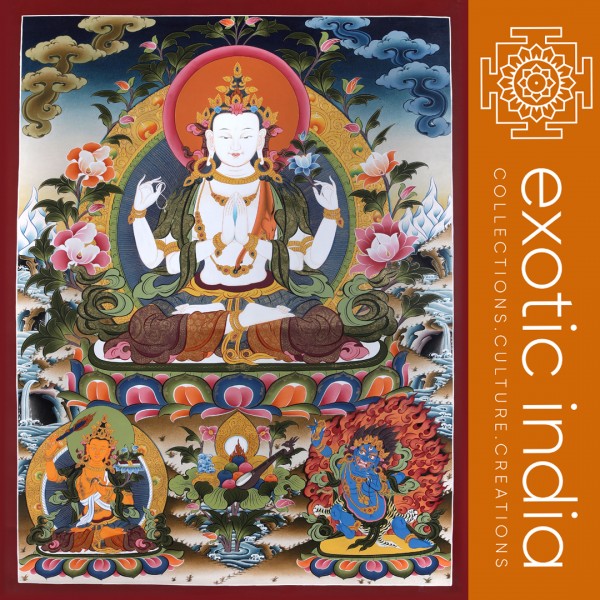
Superfine Four-Armed Avalokiteshvara - Tibetan Buddhist Brocadeless Thangka Painting
Views: 737
Uploaded: 4 years ago
 
Views: 906
Uploaded: 4 years ago
 
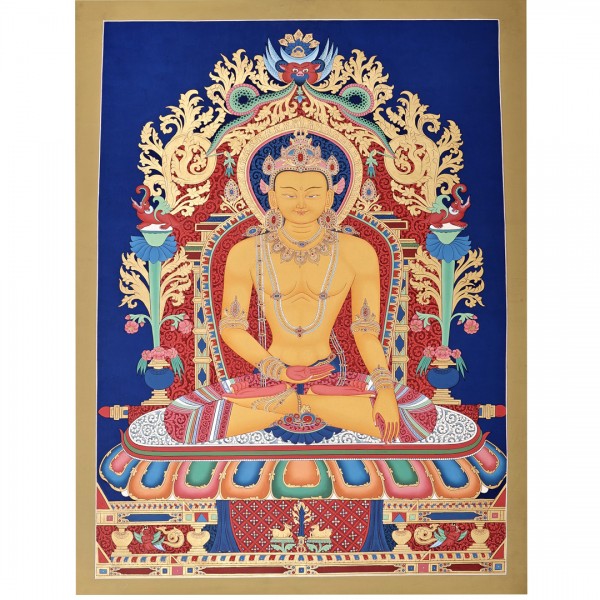
Nevari is the term for the architecture and aesthetics of the Neva people of Nepal. Inhabitants of the Kathmandu valley, the Neva people are known for their love of well-defined lines and solid, statement colours. The thangka that you see on this page is atypical of the Nevari aesthetic. It depicts the seated Shakyamuni in the bhoomisparsha stance. Gautama Buddha is clad in a peach-coloured low-wo
Nevari is the term for the architecture and aesthetics of the Neva people of Nepal. Inhabitants of t
Views: 906
Uploaded: 4 years ago
 
Views: 29
Uploaded: 6 months ago
 
Painting
Painting
Views: 29
Uploaded: 6 months ago
 
Views: 616
Uploaded: 4 years ago
 
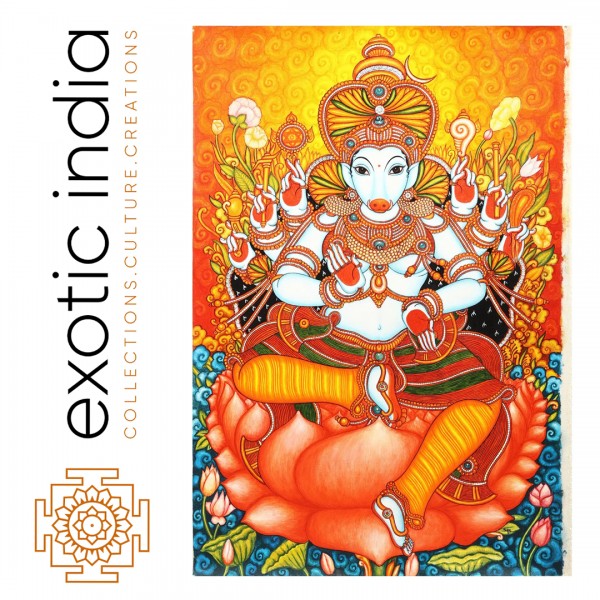
Lord Varaha, the third of Vishnu’s dashavataras, is the most instantly recognizable of the incarnations. The word ‘Varaha’ is Sanskrit for boar; and while some iconographies feature Varaha as a pig-shaped deity, the painting that you see on this page is of an anthropomorphic boar-headed human-bodied entity. Lord Varaha is possessed of eight arms (ashtabhujadhari) and clad in a flame-colored
Lord Varaha, the third of Vishnu’s dashavataras, is the most instantly recognizable of the incarna
Views: 616
Uploaded: 4 years ago
 
Views: 703
Uploaded: 4 years ago
 
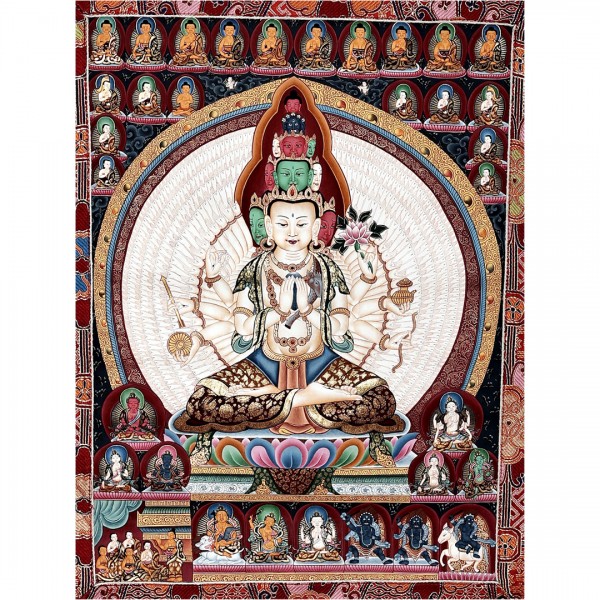
An Avalokiteshvara Thangka Painting such as the one you see on this page would be a valuable addition to the home of any Buddha devotee. It is a skillfully, perfectly symmetrically executed Lokeshvara thangka painting in His traditional iconography. He is the glorious Lokeshvara sahasrabhuja (thousand-armed), the unmistakable aspect of His iconography. Speaking of signature aspects, this is an ima
An Avalokiteshvara Thangka Painting such as the one you see on this page would be a valuable additio
Views: 703
Uploaded: 4 years ago
 
Views: 752
Uploaded: 4 years ago
 
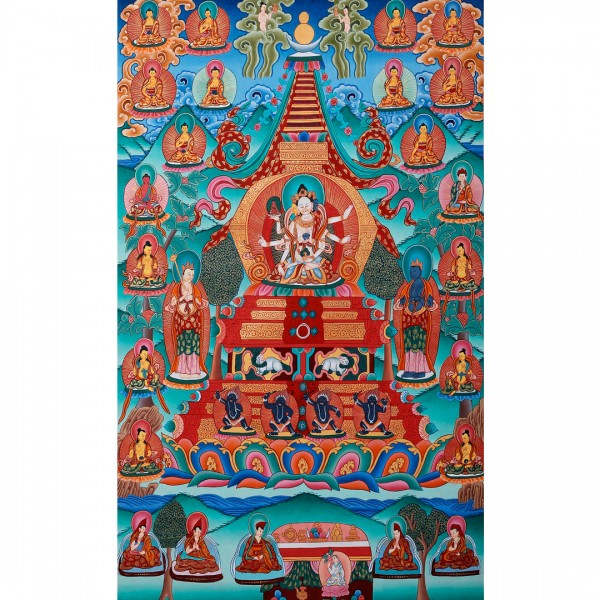
Ushnishavijaya is one of the three gods of longevity and fulfillment of desire. The other three are Amitayus and White Tara. She is often depicted with eight arms and three heads. Her main face is white while another face is peaceful in gold, the face to her left is blue in a wrathful look. In this thangka, she sits on a moon disk on top of a multi-colored lotus within a stupa or a mound. Stupas a
Ushnishavijaya is one of the three gods of longevity and fulfillment of desire. The other three are
Views: 752
Uploaded: 4 years ago
 
Views: 854
Uploaded: 4 years ago
 
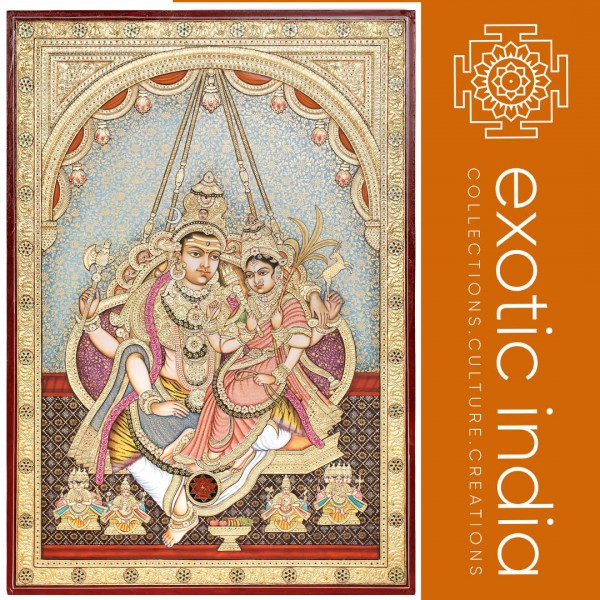
The unmistakable Tanjore painting is an especial kind of palagai padam (South Indian panel painting). Having originated as icons designed to grace the homes and temples of the wealthy, these works of art depict deities from the Hindu pantheon in all their iconographic beauty and glory. As such, the handpicked Tanjore painting that you see on this page is a collector’s item and would be a valuabl
The unmistakable Tanjore painting is an especial kind of palagai padam (South Indian panel painting)
Views: 854
Uploaded: 4 years ago
 
Views: 818
Uploaded: 4 years ago
 
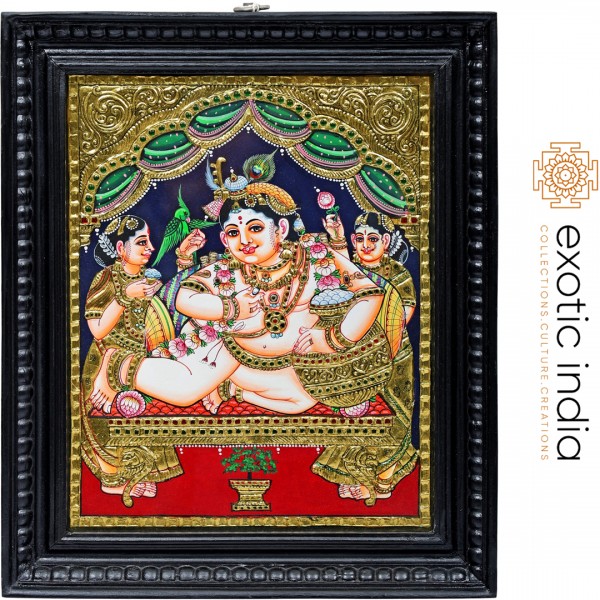
This exquisite painting displays Krishna’s childhood pastime in the traditional Tanjore style. The precision with which it has been made and the use of vibrant colors makes it appealing and breathtaking. Lord Krishna being the Supreme Lord, appeared just like an ordinary child in Vrindavan but His naughty and uncommon activities were always astonishing for all the inhabitants of Vraja including
This exquisite painting displays Krishna’s childhood pastime in the traditional Tanjore style. The
Views: 818
Uploaded: 4 years ago
 
Views: 754
Uploaded: 4 years ago
 
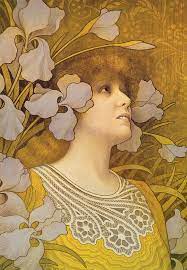
Sarah Bernhardt Painting
Views: 754
Uploaded: 4 years ago
 
Views: 1,068
Uploaded: 4 years ago
 
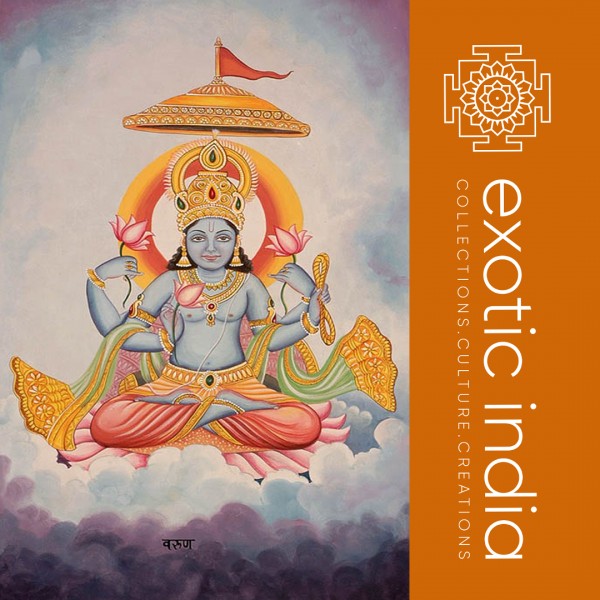
In our Shastras, it has been mentioned that there are twelve forms of the Sun known as Adityas and they represent the twelve months in the calendar and twelve aspects of the Golden Deity Sun. As they are 12 in counting, they are referred to as Dvadashadityas. Adityas are basically the monthly Suns which is an ancient word for earth-moon barycentre for a lunar month. In the Rigveda, the Adityas
In our Shastras, it has been mentioned that there are twelve forms of the Sun known as Adityas and t
Views: 1,068
Uploaded: 4 years ago
 
Views: 823
Uploaded: 4 years ago
 
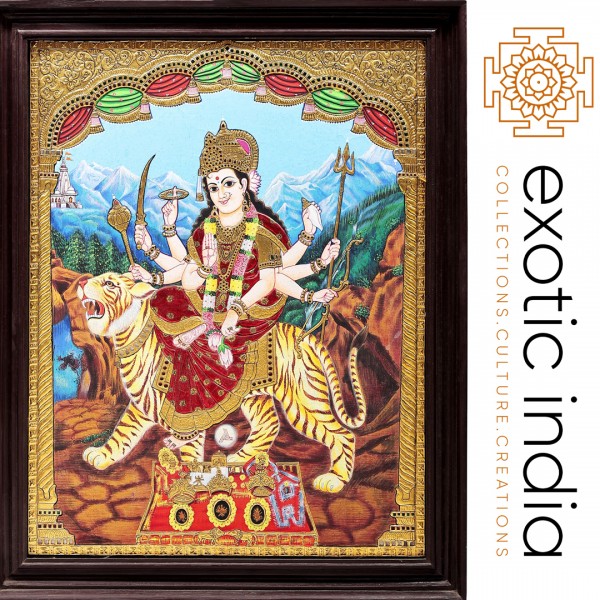
Goddess Durga is a main diety in Hindu Religion. She is associated with protection, strength, motherhood, destruction, and wars. Her legend centers around combating evils and demonic forces that threaten peace, prosperity, and Dharma the power of good over evil. Durga is believed to unleash her divine wrath against the wicked for the liberation of the oppressed and entails destruction to empower c
Goddess Durga is a main diety in Hindu Religion. She is associated with protection, strength, mother

Views: 823
Uploaded: 4 years ago
 
Views: 761
Uploaded: 4 years ago
 
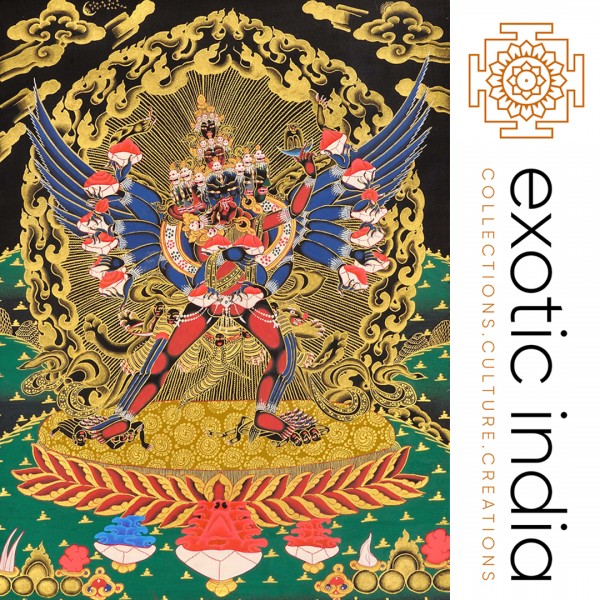
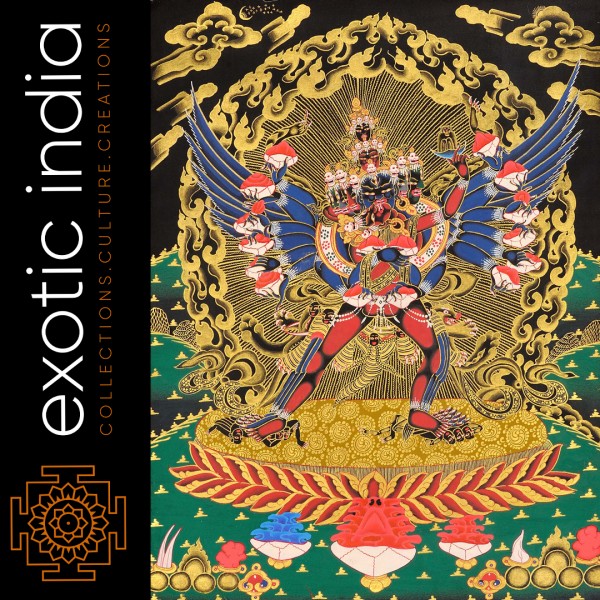
In Tibetan Buddhism, Chemchok Heruka is most notably known to be the focal divinity in the Fifty-eight Wrathful Deities mandala where he is the furious aspect of Samantabhadra. These 58 deities are said to be wrathful deities one can meet in death and rebirth. He is also known as the Mahottara Heruka. Meanwhile, in the Guhyagarbha Tantra, he is the main deity among the herukas of the Eight Command
In Tibetan Buddhism, Chemchok Heruka is most notably known to be the focal divinity in the Fifty-eig
Views: 761
Uploaded: 4 years ago
 
Views: 1,007
Uploaded: 4 years ago
 
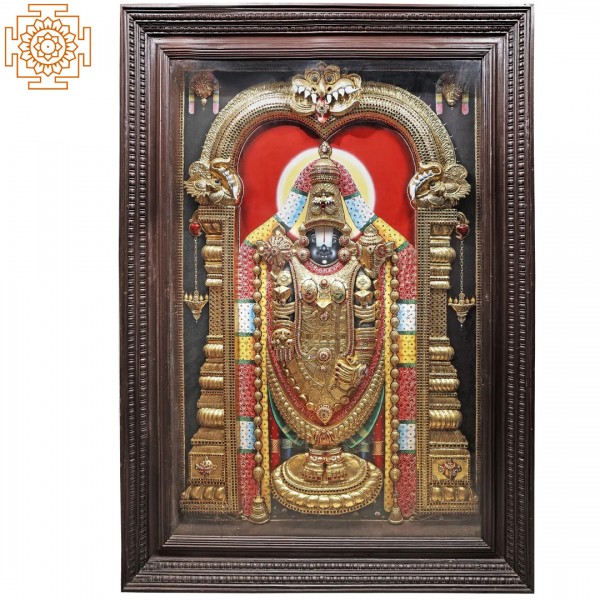
A glorious description of Lord Venkateshvara, a form of Bhagwan Vishnu. Whenever and wherever there is a decline in religious practices and an increase in irreligiosity, the Supreme Lord descends to reestablish Dharma and deliver the impious people. In Kali Yuga, Lord Vishnu appeared in Tirupati, Andhra Pradesh in the form of Bhagwan Venkateshvara to attract people to God-consciousness. Today, tho
A glorious description of Lord Venkateshvara, a form of Bhagwan Vishnu. Whenever and wherever there
Views: 1,007
Uploaded: 4 years ago
 
Views: 769
Uploaded: 4 years ago
 
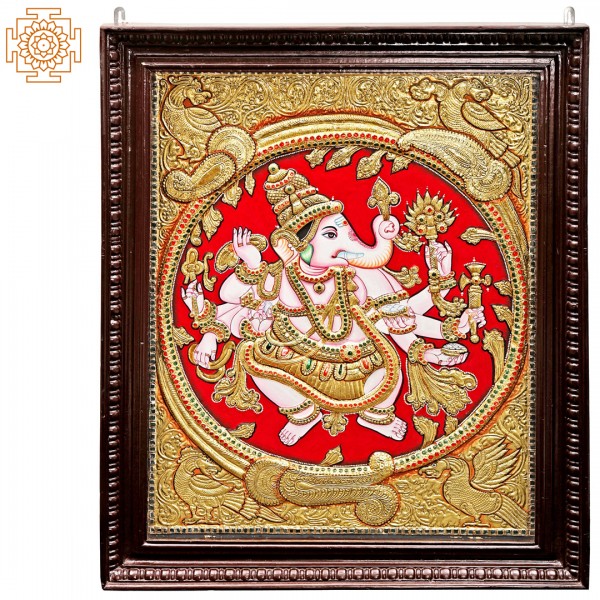
The ashtabhujadhari Lord Ganesha, the one possessed of (‘dhari’) eight (‘ashta’) arms (‘bhuja’), stands on His short, chubby child’s legs. His adorable elephant head is turned sideways, revealing the lateral profile of His face to view. But for the gold predominating this Tanjore painting, it is a bitone composition in pale pink (the complexion of His form) and scarlet (the solid-col
The ashtabhujadhari Lord Ganesha, the one possessed of (‘dhari’) eight (‘ashta’) arms (‘bh
Views: 769
Uploaded: 4 years ago
 
Views: 748
Uploaded: 4 years ago
 
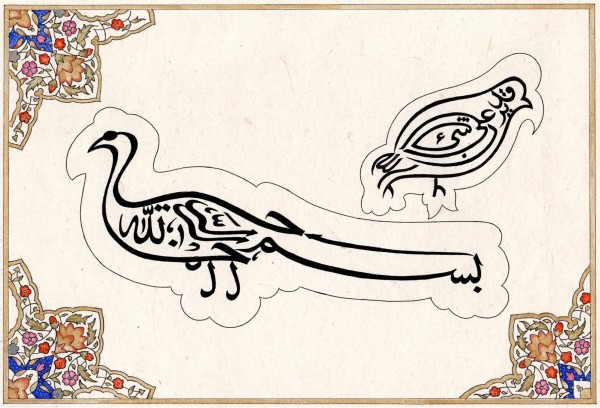
Divinity reaches the next level with Kailash Raj's new painting wonder. He again works his magic with an amazing calligraphy that captures the Islamic tradition in a nutshell. Having a vast history and mainly developing from the carvings of the Quran and ancient traditions, calligraphy holds a great position in the Islamic culture. In this painting, Kailash Raj has encapsulated the valuable p
Divinity reaches the next level with Kailash Raj's new painting wonder. He again works his magi
Views: 748
Uploaded: 4 years ago
 
Views: 744
Uploaded: 4 years ago
 
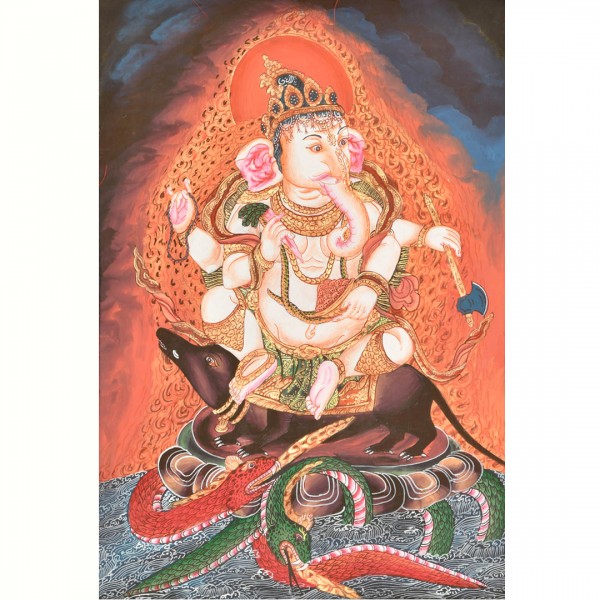
Lord Ganesh is one of Hinduism’s most prominent deities. He is the god of new beginnings and the lord who removes obstacles. Because of these, he is often invoked at the beginning of prayers or rituals, or when believers are set to undergo a major milestone and before making life decisions. He is traditionally depicted with an elephant head, often large in the proportion which signifies knowledg
Lord Ganesh is one of Hinduism’s most prominent deities. He is the god of new beginnings and the l
Views: 744
Uploaded: 4 years ago
 
Views: 807
Uploaded: 4 years ago
 
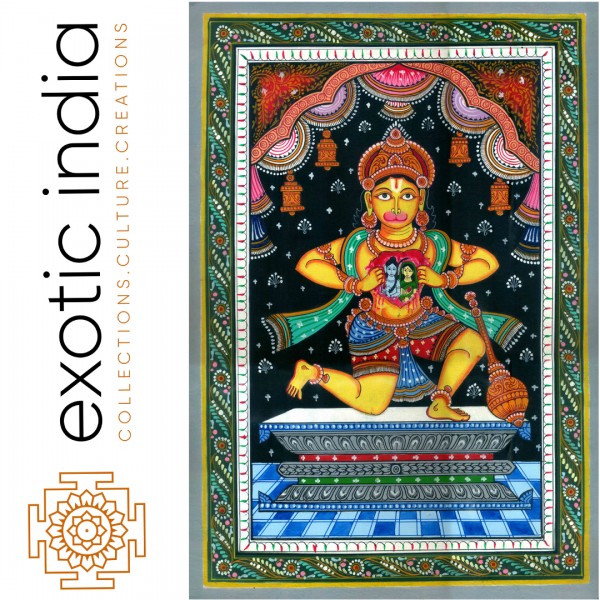
On a throne of cut-glass lotus petals kneels Lord Hanuman. The right knee grazes the surface of the throne, the left foot set against the same. Against the knee jutting out laterally rests His goad, the weapon that is indispensable to the cebine iconography of Lord Hanuman. Like the jewels on the body of the warrior deity, His weapon is engraved and studded with pearls and rubies. A red and blue d
On a throne of cut-glass lotus petals kneels Lord Hanuman. The right knee grazes the surface of the
Views: 807
Uploaded: 4 years ago
 
Views: 607
Uploaded: 4 years ago
 
In Tibetan Buddhism, Chemchok Heruka is most notably known to be the focal divinity in the Fifty-eight Wrathful Deities mandala where he is the furious aspect of Samantabhadra. These 58 deities are said to be wrathful deities one can meet in death and rebirth. He is also known as the Mahottara Heruka. Meanwhile, in the Guhyagarbha Tantra, he is the main deity among the herukas of the Eight Command
In Tibetan Buddhism, Chemchok Heruka is most notably known to be the focal divinity in the Fifty-eig
Views: 607
Uploaded: 4 years ago
 
Views: 813
Uploaded: 4 years ago
 
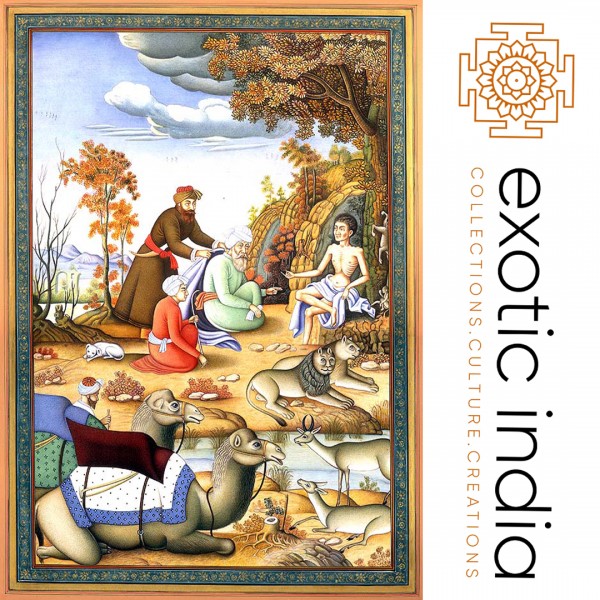
This large size miniature, a contemporary work of art rendered in late Mughal art style of around 1740-50 AD, assimilating into it some Persian art elements too, especially in portraying the topography of the land and in the choice of palette, illustrates the legend of Laila and Majnun, a world-wide known, painted and sung tale of mad love with tragic end. Laila's Watercolor Painting:
This large size miniature, a contemporary work of art rendered in late Mughal art style of around 17
Views: 813
Uploaded: 4 years ago
 
Views: 1,205
Uploaded: 4 years ago
 
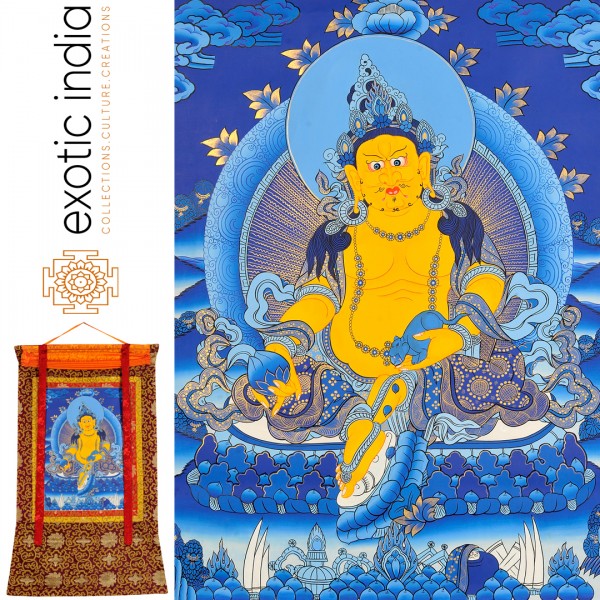
Kubera is a god-king in Hindu mythology. He is a semi-divine Lord of Wealth among the yakshas or nature spirits in the Hindu tradition. As a part of the Lokapalas, he protects the world and is the governor of the North. These Lokapalas are Guardians of the Directions involving the cardinal ways (north, east, south, and west). In Buddhism, Kubera is called Vaishravana. As evident in this thangka, K
Kubera is a god-king in Hindu mythology. He is a semi-divine Lord of Wealth among the yakshas or nat
Views: 1,205
Uploaded: 4 years ago
 
Views: 836
Uploaded: 5 years ago
 
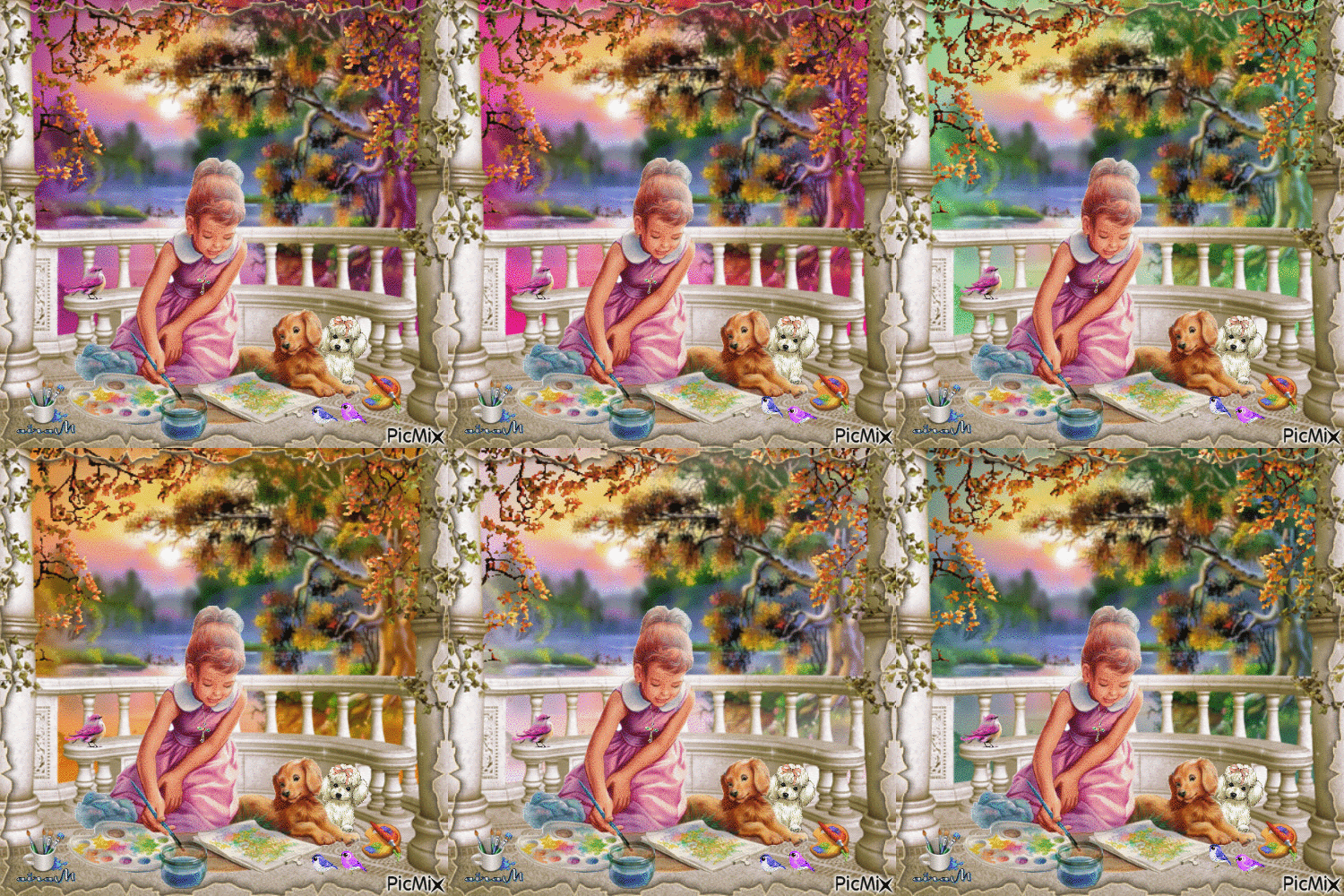
Little girl painting with her 2 pups gif
Views: 836
Uploaded: 5 years ago
 
Views: 871
Uploaded: 4 years ago
 
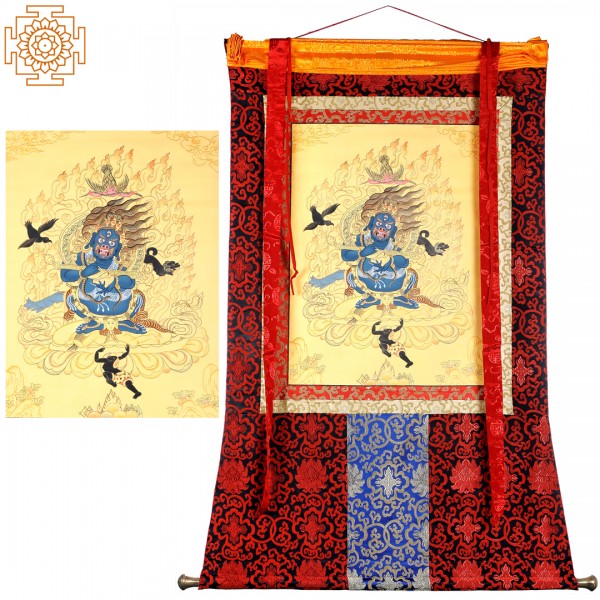
Mahakala comes from the Sanskrit maha (great) and Kala (death or time) which translates that he is a deity beyond time. In Tibet, he is also called the Nagpo Chenpo, or the Great Black One, and is revered as guardian and protector. He is affiliated with the Hindu god Shiva. According to tradition, he dwells in the cremation grounds. In this thangka, he is depicted with two arms and two legs. On hi
Mahakala comes from the Sanskrit maha (great) and Kala (death or time) which translates that he is a
Views: 871
Uploaded: 4 years ago
 
Views: 643
Uploaded: 4 years ago
 
An image of tender devotion. Lord Hanuman kneels on one knee upon the earth and gathers His hands in the supplicatory namaskaaram. His tail flourishes behind Him as He raises His head towards His beloved Lord Rama, His eyes brimming with the bhakti in His heart. Bhakti, or unconditional love, is the yogamaarga (‘maarga’ is Sanskrit for path) of Hanuman, an accomplished yogi of the finest order
An image of tender devotion. Lord Hanuman kneels on one knee upon the earth and gathers His hands in
Views: 643
Uploaded: 4 years ago
 
Views: 802
Uploaded: 4 years ago
 
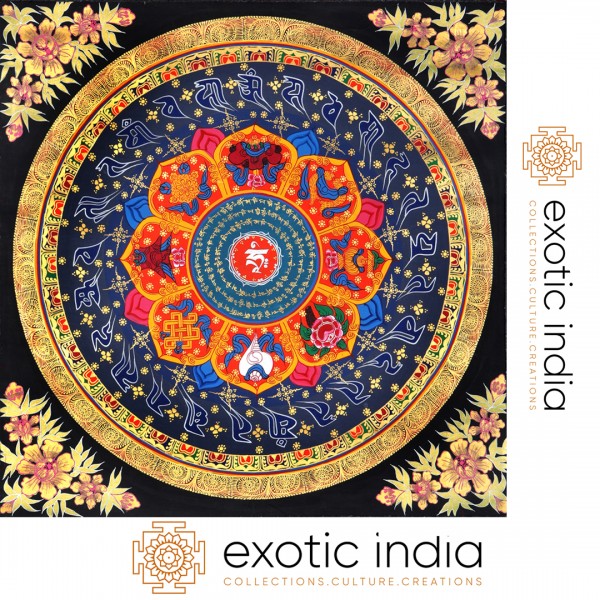
In this Spirit Of Enlightenment Mandala Thangka Painting, the sacred hum symbol is at the heart of this mandala. Thick, white strokes of the brush against a scarlet-colored circlet. Painted in the Tibetan script, it is the final syllable of the Shadakshari Avalokiteshvara mantra, which is extracted from the Mahayana Karandavyuhasootra and is considered the moola (fundamental) mantra of Buddhism. A
In this Spirit Of Enlightenment Mandala Thangka Painting, the sacred hum symbol is at the heart of t
Views: 802
Uploaded: 4 years ago
 
Views: 1,376
Uploaded: 5 years ago
 
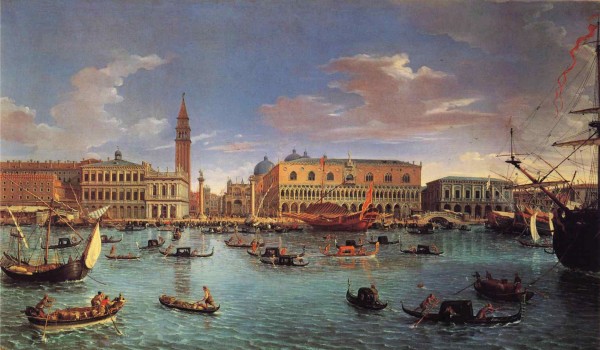
Classic beautiful view of Venice Italy as painted in 1697
Views: 1,376
Uploaded: 5 years ago